The Peacocking Paradox

Introduction to the AI Paradox Series
I am setting out to blog my thoughts on the state of AI and its implications on the economy, jobs, real estate markets, and life and society in general. These are my musing and observations, but most importantly just my opinions. To that end, I suspect I will get a number of things “right” and a large number “wrong”; I just cannot tell you when or how to score it. Since I am constantly getting asked about AI or having to hear about it everywhere, I might as well contribute
The Purpose of the Peacock’s Tail
Have you ever seen a male peacock in full display? A bird about the size of a turkey with a set of tail feathers that appears perfectly designed for a Las Vegas dance revue; it is both beautiful and eye catching, yet paradoxically stupid. Can those beautiful tail feathers help this bird find food? Nope. Protect itself from a predator? Nope! What do they actually do? Look beautiful, and that is its purpose, to make the male peacock look attractive to birds of the opposite sex. Before you laugh at this silly adaptation of evolution or odd design of divine orchestration (per each’s own predilections); know that humans do this all the time!

Human Peacocking Is Just as Ridiculous… And Effective
Humans engage in displays of peacocking all the time; it’s a feature of fashion, performance art, and even workplace gimmickry. Yes, we all love a good peacock display, even when we know it was useless and unproductive. Thus, why is it effective? Peacocking is what economists call, a form of signaling. The male species of the colorful bird is displaying their health and vitality, as a sick bird cannot grow and maintain a beautiful display, as such, its presence tells everyone (and most importantly… the lady peahens) that this bird is healthy and strong, and thus a suitable and desirable mate. Humans do this all time to attract romantic partners, sell products, or raise capital (go watch Shark Tank!). In fact, the VH1 show Mystery Method featured a “pickup artist” wearing a top hat and goggles (Google it…) who taught hapless men how to “peacock” to be better at attracting women.

Why Rely on Signals
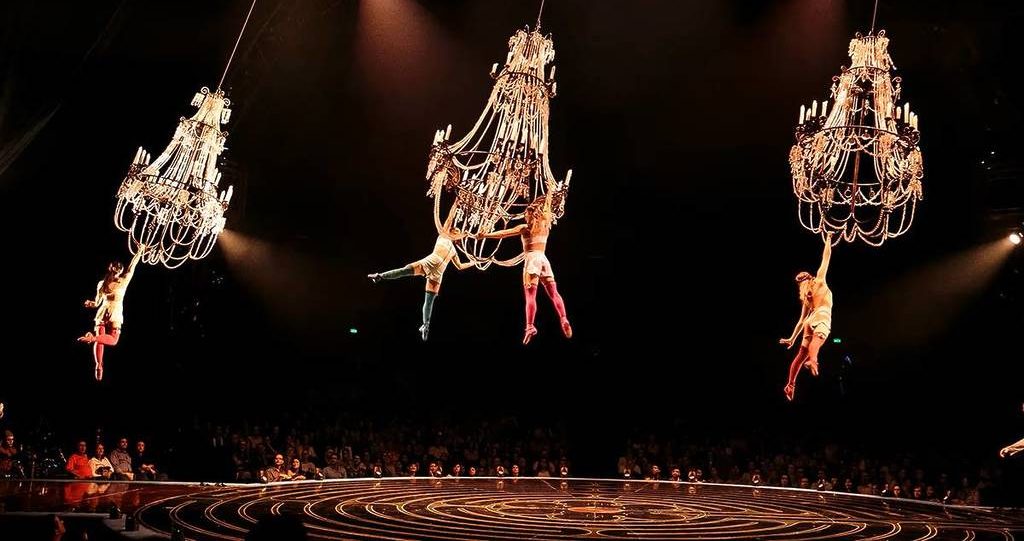
We all have limited time to make decisions, in fact this is one area we share with AI models, a virtual shot clock on token usage (i.e. we sometimes have to pick something, make a decision, or say something in a very limited period of time). Thus, a signal is a useful device to give us information; and the best signals are clear, unambiguous, and most importantly, difficult to fake. Think about the lights and sirens on a police car, they tell you to get over, now. An officer waving his arms out of a random car’s windows while shouting would be far less effective. Our male peacocks on full display and goggle wearing pickup artists are both using the same tactic, gaining attention in a way that is painful and disadvantageous, and thus must be a true signal of awesomeness (I told you it was a paradox!). My favorite example of human peacocking, at least the one I’ve spent the most money to watch, is Cirque Du Soleil; those performers are amazing, but their acts are totally useless beyond keeping me entertained for a few hours. It is because it is difficult to perform those acts that make a ticket valuable and expensive.
Do We Care if a Computer Peacocks?
Ever see someone do long multiplication in their head? Like 354×1032? Impressive right! I can tell you the answer is 365,328 because my iPhone’s calculator app told me so! I’m guessing you are not in the least bit impressed by my calculator skills, nor by the calculator itself. Technology does the impossible, that is literally what gives it value. This plus a million other features of the iPhone made Apple the first trillion-dollar firm. The calculator let more people do math, but didn’t change the value of math, nor the humans doing math. In short, the iPhone is not peacocking, its just functioning as engineered. We value things based on difficulty, rarity, scarcity, and practicality/usefulness; with the first three vastly outweighing the last one. Crazy right? Economists call this the diamonds and water paradox (i.e. which one is both life sustaining and universally free at restaurants?). A woman wearing a huge, expensive diamond ring (at least before the advent of lab grown diamonds….) is signaling, aka peacocking, the value of the mate that chose her as a life partner and thus the value of herself. It’s not the sparkle or the beauty of the diamond… it’s the cost that matters. Am I surprised by the output of AI models and systems today? Yes, but I’m not impressed by the AI output. What impresses me is the long stack of human innovation and discovery that created those models (i.e. without electricity, good luck firing up those GPUs that run Claude). If you have ever seen, read, or watched something to have the reaction of “oh that’s AI” before moving on, you are not impressed either.
The Future of Humanity and Peacocking
Humans still run marathons, but I promise you a beat-up Honda Civic could get you the 26.2 miles in a time substantially faster than the fastest marathoner alive! AI can write blog posts, but you are still reading this one written by a human! Human value is driven by difficulty, rarity, scarcity, and yes…. practicality/usefulness, it always has been. Will AI change this? I highly doubt it, but there are a bunch of sectors of the economy filled with peacocking humans who better figure out that this is what they are doing (as I write this, it is theoretical mathematicians that have been put on notice by the recent release of OpenAI’s math research dump). Does the male peacock know, or care, it’s feather display is functionally useless? Probably not, it helps him land a mate, which is the prime directive of most animals; thus, it functions for him. Thus, if you want to be valuable as a human in a world facing an AI Revolution, you better get your peacock on.
A Warning – Peacocking is Dangerous
I can’t let you go without discussing the dark side of peacocking, the necessary dark side. For an act of peacocking to be meaningful and successful, it MUST be risky! Mystery, the goggle clad pickup artist, risked social mockery; the Cirque du Soleil trapeze artists risk literal death, and I suspect our beautifully feathered friends take similar mortal risk (like getting too big to be able to escape an alligator, my best speculation, go ask an AI if you care). As morbid as it sounds, this fact is why people will spend good money to see a Cirque show live and in-person; the risks are understood (and all too real…). AI could produce a more spectacular visual display of a Cirque style show, no question, but it will remain worthless beyond some cheap views/clicks on social media. The human element makes it worth watching, and I highly doubt an AI can replace that fact in most instances. I suspect this is what will be the ultimate guard rail of humanity, its own fragility. In a famous episode of Star Trek: The Next Generation, the seemingly immortal, God like character Q is stripped of his near-omnipotent powers and banished in mere mortal form to the bridge of the Starship Enterprise; he asks how he can prove he is now human, to which Worf responds… Die. No risk, no return, that is part of human exceptionalism, and I suspect what will keep us grounded in these interesting times!

A Special Note for the Real Estate and Urban Audience – Can a City Peacock?

I am writing this from my home in the City of Winter Park, Florida, a city with a peacock as its logo and unofficial bird/mascot. We have them here, they still run wild around Lake Mizell and surrounding neighborhoods. If you know anything about Winter Park, Florida you know that the peacock is an apt mascot beyond its home to famed bird. Winter Park is one of “those” places, where people go to be seen (especially on our famous Park Avenue high street). Living in Winter Park commands a premium, one that is reflected in real estate prices of all asset classes. Is it functionally better than the surrounding cities/neighborhoods of equal distance to downtown or similar places around Central Florida? Not really, but many wouldn’t want to live anywhere else. How do you know a Central Floridian lives in Winter Park, easy…. They will tell you! It is a form of peacocking! And if see our housing prices and commercial rents, you know it is a costly one!